
Therapy Group
Schema Therapy for Transgenerational Trauma
Working through family issues that have intensified during the war. Using schema therapy techniques—in a group setting, alongside others.
On Choice
Look at the stones on the cover. Each one is a pattern. A script. A way of seeing yourself, others, and the world—one that kicks in on its own, even before you have a chance to think. These patterns formed early on, when a child’s basic needs weren’t being met. And often, they’re older than you are. You didn’t choose these stones, but you’ve grown accustomed to living as if they were you.
Schema therapy lets you examine each one: where it comes from, whose it is, what it holds. And the transgenerational lens reveals something deeper—where the origin of this script lies not in your childhood, but a generation or two earlier.
We can’t change the past. But we can change the pattern we live by. We can recognize it. We can weaken its hold. And we can stop passing on to our children what we ourselves didn’t want to inherit.
As children, we didn’t always have a choice. Now we do.
13 lessons
From security and trust—through working with the different modes—to a healthy adult.
3 hours per week
Every Saturday, 6:00 p.m.–9:00 p.m. Kyiv time. Online.
Private group
The same lineup from the first game to the last. A small group where it’s safe to open up.
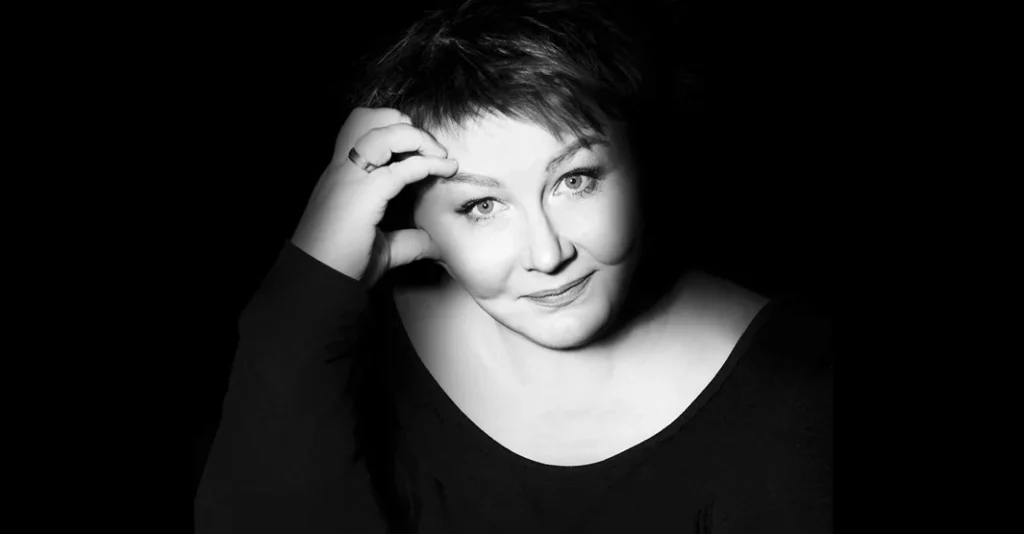
Hello. My name is Tetiana Stanislavska. I am a clinical psychologist, psychoanalyst, graduate student at KISPP, and founder of the War Trauma Institute. I have over 20 years of clinical experience.
Transgenerational trauma is the focus of my dissertation and my daily work. I have developed a Ukrainian adaptation of the HITT-Q questionnaire and the LCHL model—“Landscape–Boat–Human.” I am studying
Schema Therapy in depth as part of an ISST-accredited program. This group combines both approaches.
More about me.
Group A — 12,500 UAH:
October (3, 10, 17, 24, 31), November (7, 14, 21, 28), December (5, 12, 19, 26).
Group В — 15,000 UAH:
March (6, 13, 20, 27), April (3, 10, 17, 24), May (1, 8, 15, 22, 29).
Registration (in Ukrainian)
For adults who are dealing with issues that didn’t start with them. Not necessarily psychologists—for anyone who recognizes recurring patterns in themselves and is ready to work through them.
This is a therapeutic group for personal work. If you’re a professional looking for a method, check out the training course “5 Stages of Working with Transgenerational Trauma”.
How does the course work?
Step 1.
Starting Point
Before our first session, you’ll fill out the HITT-Q—a questionnaire on the intergenerational transmission of trauma—which I’ve adapted into Ukrainian and validated with nearly three hundred people.
Next, I’ll conduct a detailed analysis of your results, and we’ll meet in person to discuss your starting point and what you’re bringing to the course.
The cost of the consultation is included in the course fee.
Step 2.
Safety and Mapping
Patterns arise when a child’s basic emotional needs have gone unmet.
That’s why the work begins not with analysis, but with experience: the group becomes a safe space where you don’t have to put up defenses. At the same time, we’ll create your map—identifying which patterns and modes are triggered in you and how to recognize them in the moment.
Step 3.
Protections That Save Lives
Coping mechanisms—the detached defender, the compliant surrenderer, the overcompensator—once saved us: they numbed our feelings, taught us to endure, and keep everything under control. These are often strategies inherited from our ancestors—that’s exactly how they survived.
That’s why we don’t “break down” these defenses. Instead, we confront them empathetically: we acknowledge the value of the defense, what it has done, and the function it served. Together, we examine what it’s worth now. A defense softens only when it feels respect and gratitude.
Step 4.
“It didn’t start with you”
A punitive and demanding inner voice—the one that judges and drives us on. In schema therapy, it is brought to the surface and stripped of its power: working with chairs, engaging in dialogue with the schemas.
But first, we uncover its history. Because “don’t stick your neck out,” “put up with it,” and “keep quiet” aren’t just someone’s words. It’s a code that once saved lives: under repression, under famine, under occupation, it served a specific purpose. It’s important to acknowledge this—and strip it of its power over the present.
Step 5.
A Wounded Childlike Part
Behind the defenses lies the part that was once left unconsoled. A vulnerable child, and next to it—an angry one: anger that had no right to exist.
This step will involve techniques of limited parenting. The entire group will provide these techniques. The very experience that was missing. Rescripting images: returning to the scene where it all began and rewriting it.
Trauma becomes a thing of the past when there is a witness. There are many witnesses here.
Step 6.
Healthy adult portion
Finally, we strengthen the healthy, mature part of ourselves—the part that knows how to comfort our child, rein in the punitive parent, and choose something more vibrant in place of old defenses.
We integrate our experiences—both our own and those of our family—into a coherent memory, where the past remains in the past. Where we can honor our family history without carrying its trauma.
Therapy group sessions can wait if you’re currently in the midst of an acute crisis or in an unstable state—it’s important to stabilize yourself first. The group setting is safe when you have something to lean on.
What will you take with you?
Not a set of tools, but a transformation.
You’ll see the system in which you’ve lived your life and realize what in it belongs to you—and what you’ve been carrying on behalf of others. You’ll return to your lineage what isn’t yours. You’ll encounter your vulnerable side—but no longer alone, rather within a circle that supports you.
You’ll give yourself the right to live by different rules than the ones you inherited.
Profound changes can’t happen in just three months—I’m not promising that. But seeing clearly the system you’ve lived in your whole life and stopping carrying the burdens of others—that’s already the beginning of your true self.
We are open to collaboration
Corporate training: programs for psychological services, medical facilities, and military organizations. University partnerships: integration of programs into curricula. Supervision and consulting: for organizations working with trauma.
We have been working throughout the war — and we will continue to do so afterward.
Join us.
For inquiries regarding cooperation:
war.trauma.institute@gmail.com
+380 68 95 92 911
About mental health during and after the war (in Ukrainian, but you can use Telegram’s translator):