RESEARCH

Transgenerational Trauma and Resilience Among Ukrainians

Ukraine is now the world’s largest laboratory for studying the psychological effects of war. We are turning the experience of Ukrainian transgenerational trauma into science.

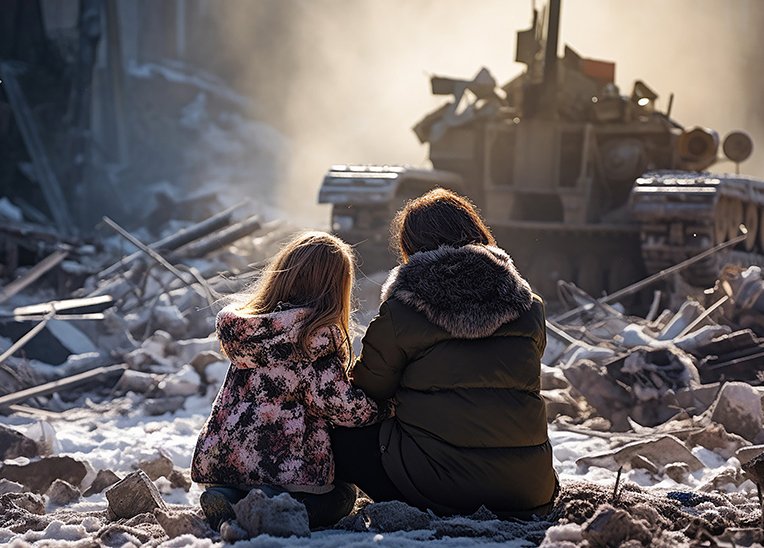
The full-scale war has created a unique and tragic context for exploring how contemporary mass trauma interacts with previous layers of family and historical experience ​

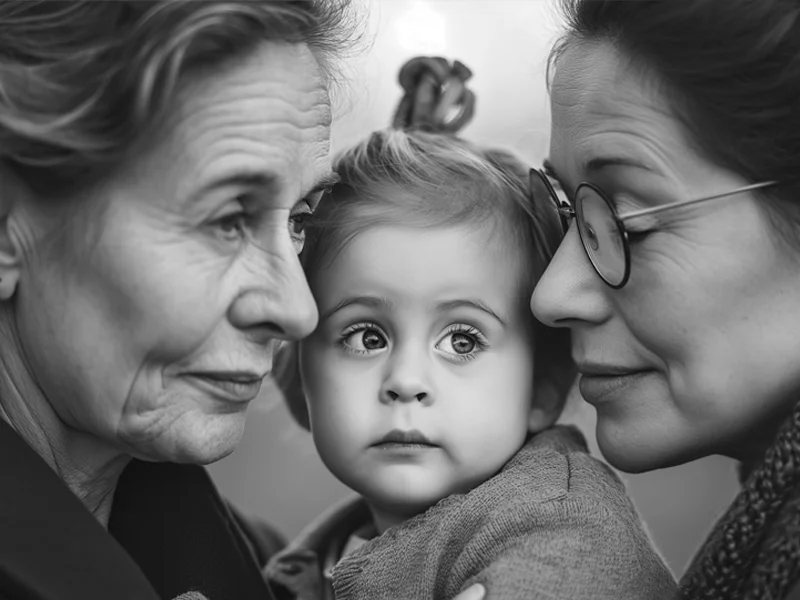
Trauma and resilience have an intergenerational dimension

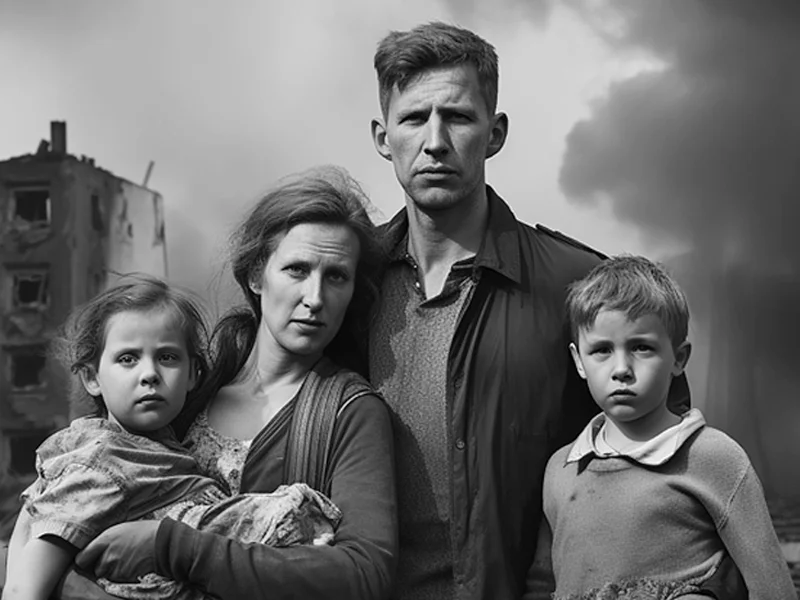
The history of Ukrainian families is marked by several successive waves of collective upheavals: the Holodomor, forced collectivization and the dispossession of the kulaks, political repression, World War II and the Holocaust in Ukrainian territories, deportations, forced resettlements, the Chernobyl disaster, the Russian-Ukrainian war since 2014, and the full-scale invasion.
These events may remain within families not merely as memories of the past. Their consequences are reflected in the ways people speak or remain silent about what they have experienced, raise their children, respond to danger, cope with loss, and maintain a sense of belonging, values, and the ability to act.
At the same time, it is not only vulnerability that is passed down through the generations. Family experiences can include ways of surviving, adapting, supporting one another, and recovering.

That is precisely why we are exploring transgenerational experiences as a complex interplay of traumatic consequences and resources—at a time when previous layers of family history are being brought to the surface by the new war.

The Institute’s research program brings together four interrelated areas

1. We adapted the HITT-Q for Ukraine. We translated and culturally adapted the Questionnaire on the Intergenerational Transmission of Historical Trauma and conducted psychometric testing of the Ukrainian version.

2. We have completed a study of Ukrainian civilians. We analyzed the relationships between transgenerational experiences, psychological resilience, and coping strategies.

3. A study was conducted on military personnel and veterans. The study examined how family and historical vulnerability, as well as inherited resources, are linked to the resilience of people who have firsthand experience of war.

4. A pilot therapeutic program called NET–LCHL was conducted.Changes in the participants’ overall self-efficacy and self-esteem were assessed following group processing of their personal and transgenerational histories.

Detailed methodology, psychometric indicators, and research results are available on the dedicated website HITT-Q

Join us in continuing to collect data

The main phases of the research program have been completed. At the same time, we continue to collect Ukrainian data for future studies, cross-cultural comparisons, and the development of psychological interventions.

Select the version of the HITT-Q that best suits your purpose for taking the test.

Please note
The questionnaire currently available on this page is the Ukrainian adaptation of the HITT-Q, developed and validated specifically for people with experience of Ukrainian collective traumas — the Holodomor, Soviet occupation, and the ongoing war. If you are not from this cultural context, the results may not be meaningful or accurate for your experience.

However, if you have Ukrainian-speaking friends or family members who might benefit from this tool — feel free to share this link with them.
We are actively working on adaptations for other cultural and linguistic contexts. If you are a researcher interested in collaboration, or if you would like to be notified when a version relevant to your background becomes available — please contact us at.

Thank you for your interest in this work.

The basic version of HITT-Q with automatic calculation of individual results

Participation in further research on the transgenerational experiences of Ukrainian civilians

Participation in further research on the transgenerational experiences of military personnel

Every family history is part of the history of society. Researching family histories preserves the memory of the past, deepens our scientific understanding of transgenerational experiences, and contributes to the development of more sensitive psychological support for current and future generations.

Take the survey!

We are open to scientific collaboration

The “Institute for War-Related Psychological Trauma” invites universities, research centers, clinical institutions, professional associations, charitable foundations, and international organizations to collaborate.

Institutional partnerships: joint and multicenter research, involvement of clinical and academic sites, cross-cultural comparisons, data sharing, and integration of the HITT-Q into research and educational programs.

Expert collaboration: participation in joint working groups, analysis and interpretation of results, peer review, supervision, and preparation of scientific publications.

Grant partnerships: joint preparation of international grant applications, funding for subsequent research phases, and scaling up the NET–LCHL therapeutic program.


We have been working throughout the war — and we will continue to do so afterward.
Join us.

For inquiries regarding cooperation:
war.trauma.institute@gmail.com
+380 68 95 92 911

About mental health during and after the war (in Ukrainian, but you can use Telegram’s translator):