


RESEARCH AND CLINICAL PROJECT
Transgenerational Resilience in Ukraine
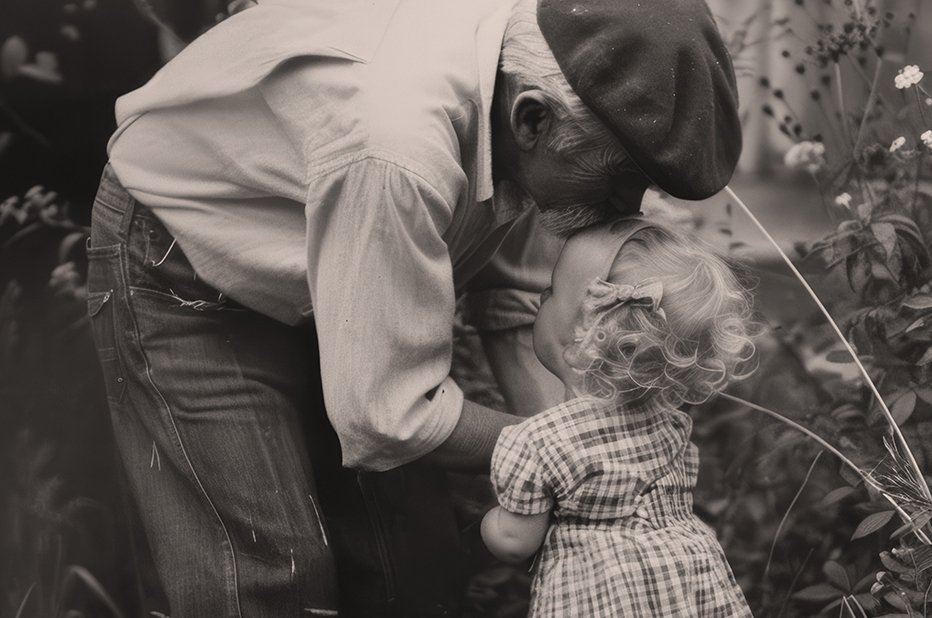
It is not only trauma that is passed down from one generation to the next—it is also ways of surviving, preserving oneself, and recovering. We are exploring how this experience shapes the resilience of Ukrainians during the war and how it can be applied in therapy.
We integrate the assessment of transgenerational experiences, clinical formulation, therapeutic work, and the evaluation of changes into a single, coherent trajectory
Innovative clinical model:
HITT-Q + LBP + NET
HITT-Q (Historical Intergenerational Trauma Transmission Questionnaire)
measures transgenerational experiences and resources
LBP (the “Landscape-Boat-Person” model)
translates HITT-Q findings into an individualized clinical formulation
NET (Narrative Exposure Therapy)
provides a framework for therapeutic exploration of one's personal life story
For me, the entire process is important: assessing transgenerational experiences, translating the findings into clinical formulations, therapeutic work, and evaluating changes. Ukrainian data, my original model, and the pilot study completed as part of my dissertation research form the basis for a larger-scale international study.
The “War Trauma Institute” has already established a Ukrainian research and clinical platform for measuring transgenerational experiences, conducting therapeutic programs, and evaluating their results
403 civilians
A research dataset on the transgenerational experiences and resilience of Ukrainians during the war
123 service members and veterans
A separate study of transgenerational experiences, psychological resilience, and negative states
37 participants
As part of the dissertation research, a pilot study of the author’s program was conducted in two therapeutic groups. All 37 participants completed the program and underwent pre- and post-intervention assessments.
HITT-Q
Psychometric validation of the Ukrainian version of the HITT-Q was conducted on a sample of 299 participants; a retest study was conducted on a sample of 142 participants.
Educational Infrastructure
The NGO “War Trauma Institute” is a registered provider of continuing professional development programs within the Ukrainian Ministry of Health (No. 2221). Since the start of the full-scale war, more than 250 specialists have completed training through more than 10 of the Institute’s educational programs.
Clinical and Professional Resources
The Institute’s team consists of more than 20 specialists with experience working with civilians and military personnel. The nonprofit organization “War Trauma Institute” collaborates with a psychiatric facility in Kyiv.
The project is grounded in the dissertation research of Tetiana Stanislavska, founder of the War Trauma Institute, and has received the required academic and ethical approvals. Findings from the Ukrainian adaptation of the HITT-Q have been reported in three scientific publications with DOIs. Several additional manuscripts are currently under peer review.
Developing a unified research-clinical pathway: measuring transgenerational experiences, clinical formulation, therapy, and outcome assessment
HITT-Q — Measuring Experience
Questionnaire on the Intergenerational Transmission of Historical Trauma. It helps measure how a family’s experiences of war, the Holodomor, repression, loss, and displacement are reflected in the experiences of their descendants—in family narratives, upbringing, fears, values, and resources.
LBP — Clinical Formulation
The author’s “Landscape–Boat–Person” model combines historical and contemporary contexts, mechanisms of trauma transmission, family vulnerabilities and resources, as well as the vulnerabilities and resources of the individual.
NET — Therapeutic Work
Narrative Exposure Therapy is an evidence-based method developed for people exposed to multiple traumatic events. It supports the chronological reconstruction of the life narrative and the processing of traumatic memories within their broader biographical context.
Clinical Pilot
A total of 37 participants completed the author-developed therapeutic program HITT-Q + LBP + NET in two groups. Psychological indicators were assessed before and after participation.
Outcome Monitoring
The next phase of the study involves expanding the list of indicators, repeating the program with new samples, and conducting a long-term assessment of the sustainability of therapeutic changes.
International Study
The goal of the next phase is to develop a multicenter research protocol, conduct a joint analysis of Ukrainian data, and publish the results in international peer-reviewed journals.
We propose a model for international partnership
The goal is to scale the project to multiple research sites, strengthen the study design, secure grant funding, and ensure that the results are presented internationally.
“War Trauma Institute”
- Provides the Ukrainian adaptation of HITT-Q, the author-developed Landscape–Boat–Person (LBP) model, materials from the completed pilot, and the available Ukrainian research data.
- Takes responsibility for the transgenerational component of the clinical model and its integration into the research protocol.
- Organises Ukrainian clinical and research sites and recruits study samples.
- Recruits participants and ensures informed consent, ethical procedures, clinical safety, and data collection.
- Forms and coordinates the Ukrainian team of practitioners.
- Ensures the delivery of therapeutic programmes by Ukrainian practitioners who have completed the training required under the jointly agreed protocol.
- Participates in developing the study design and in analysing and interpreting the findings.
- Contributes to the preparation of international grant applications and joint scientific publications.
Proposed Role for vivo international and the NET Institute
- Provide an expert assessment of which components of the proposed programme correspond to the principles and procedures of standard NET.
- Help refine the terminology and clearly distinguish between standard NET, adapted NET components, and the author-developed components of the Landscape–Boat–Person (LBP) model.
- Participate in refining the clinical and research protocol for the future study.
- Provide Ukrainian practitioners with training in the standard NET protocol.
- Provide supervision of the NET component during the implementation of the new study.
- Contribute to the development of a manual, criteria, and a checklist for assessing adherence to the NET component of the protocol.
- Involve designated clinical and scientific experts in a joint working group.
- Help engage additional international clinical or academic sites.
- Participate in developing the study design and in analysing and interpreting the findings.
- Contribute to identifying international funding opportunities and preparing grant applications and joint scientific publications.
Expected joint outcome: a multicenter protocol, new therapy groups, a shared dataset, and international scientific publications
We invite vivo international, NET Institute, universities, clinical institutions, research centers, foundations, and grant consortia to join the international expansion of the project
A partner may participate in the entire research cycle or take responsibility for a specific area: the study protocol, the clinical site, funding, data analysis, or international publication.
We have been working throughout the war — and we will continue to do so afterward.
Join us.
For inquiries regarding cooperation:
war.trauma.institute@gmail.com
+380 68 95 92 911
About mental health during and after the war (in Ukrainian, but you can use Telegram’s translator):