

Research data
Ukrainian data on the intergenerational transmission of trauma
The first psychometric data on transgenerational trauma collected in the midst of active warfare. Available for scientific use. Such data did not exist prior to 2024. Now it does.
RESEARCH DATA
Ukrainian data on the intergenerational transmission of trauma
The first psychometric data on transgenerational trauma collected in the midst of active warfare. Available for scientific use. Such data did not exist prior to 2024. Now it does.
The first comprehensive set of psychometric measurements of transgenerational trauma in Ukraine. The sample was collected in 2025 amid a full-scale war. These are not archival data or retrospective assessments, but a real-time snapshot of how Ukrainians are experiencing and passing on trauma right now
Trauma is contagious. Now it can be measured.
That is exactly what we did: we compiled Ukraine’s first dataset of psychometric data on the intergenerational transmission of trauma in the context of active warfare. This data serves as the scientific foundation for clinical work addressing the consequences not only of this war, but of all future ones as well.
299 participants. Real time. Real Ukrainians.
We collected this data at a time when it was the hardest to gather. And the most important. Transgenerational trauma has a face. Names. Numbers. Here they are.

Tetiana Stanislavska
The numbers speak for themselves: Ukraine’s trauma is multifaceted and did not begin in 2022
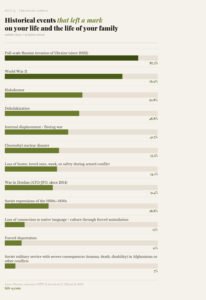
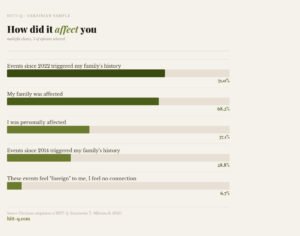
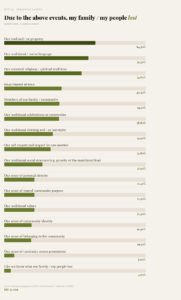
Historical events: 87.3% of participants noted the impact of the full-scale invasion on themselves and their families. Close behind were World War II (76.9%), the Holodomor (50.8%), and the dispossession of the kulaks and subsequent repressions. 71% felt that the events of 2022 served as a trigger for their family history. The greatest losses were land and property (64.5%), native language (59.5%), and spiritual traditions (54.8%).
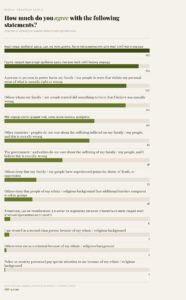
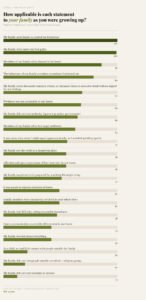
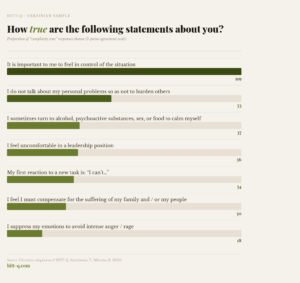
Family dynamics: shame as a tool of control, guilt, and raised voices—the most common patterns in families. Yet 118 out of 299 study participants are proud of their family and people. Resilience coexists with vulnerability—and this is a key clinical finding.
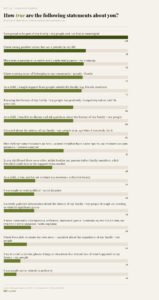
Moral trauma: 145 out of 299 feel that someone has acted unjustly toward their family or people. This is the highest score on the scale.
We are open to various forms of collaboration
Institutional partnership: joint research, data sharing, integration of HITT-Q into academic programs. Expert collaboration: participation in the scientific board, peer review, supervision. Financial support: grant or direct contribution to the research.
This research needs support.
If you are a donor, foundation, or academic institution — we are ready to talk.
warpsychotrauma@gmail.com +380 68 95 92 911


